From classrooms to communities across Nigeria, children are speaking up about the future they deserve, calling for better education, accessible healthcare, protection from violence, and a greater voice in decisions that shape their lives.
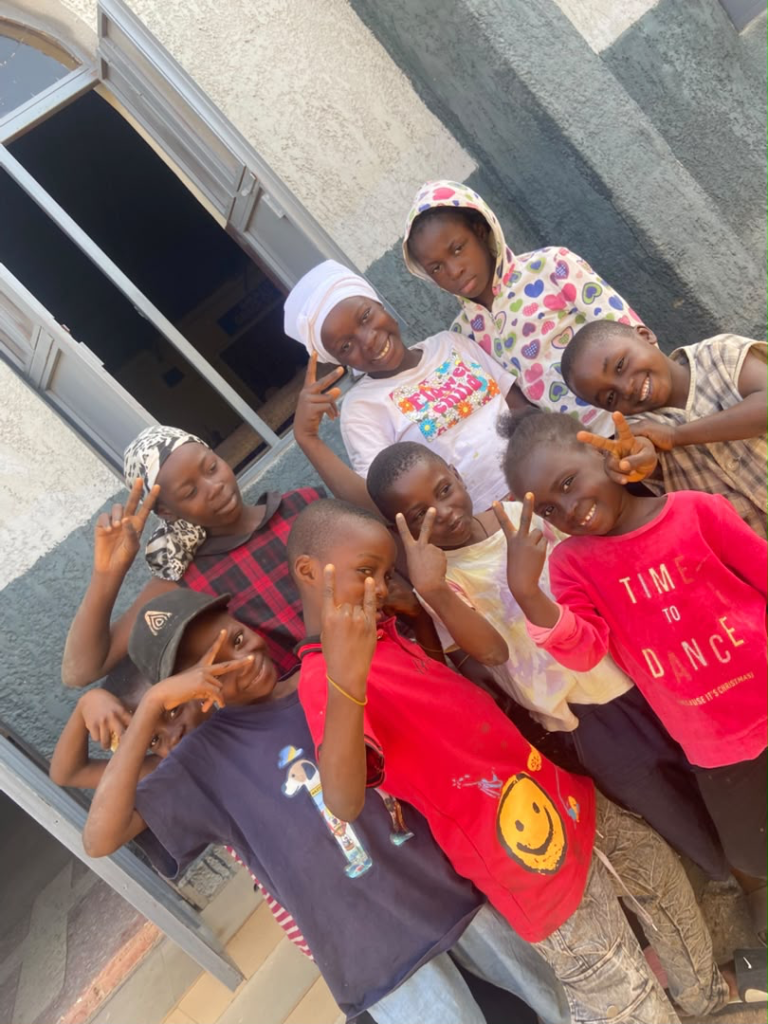
World Children’s Day 2026 | Kids & Teens Resource Centre (K&TRC)
What kind of Nigeria do children want to grow up in?
One where every child can attend school without fear, receive quality healthcare, live free from violence and exploitation, and have the opportunity to pursue their dreams.
These may sound like basic expectations, but for many Nigerian children, they remain everyday challenges.
As Nigeria prepares for the 2027 general elections, children are making it clear that their needs, experiences, and aspirations deserve a place in national conversations about leadership and development.
On Friday, 20 November 2026, in commemoration of World Children’s Day, Kids & Teens Resource Centre (K&TRC), in collaboration with child rights organisations and civil society partners across Nigeria, facilitated the launch of the Nigerian Children’s Charter for the 2027 Elections.
The initiative brought together children’s voices from 33 of Nigeria’s 36 states, creating a platform for them to express their concerns, share their experiences, and identify the issues they want political leaders to address.
Although children are not yet eligible to vote, the decisions made during elections and throughout the years that follow have a direct impact on their education, safety, health, and future.
The Charter therefore seeks to ensure that their voices are heard and their interests are considered in the policies and commitments that will shape Nigeria beyond 2027.
Giving Children a Voice in Nigeria’s Democratic Future
Elections often bring conversations about economic growth, infrastructure, security, employment, and national development. Yet, within these discussions, the experiences and priorities of children can easily be overlooked.
The Children’s Charter initiative was designed to help bridge that gap.
During the interactive national dialogue, participating children spoke about the challenges affecting their lives and communities. Their contributions highlighted four major priorities: quality and inclusive education, accessible healthcare, protection from abuse and exploitation, and freedom from violence.
Beyond identifying these challenges, the children expressed their expectations for political parties, candidates, and elected representatives. They want their concerns reflected in campaign promises, development plans, public budgets, and government policies.
For the children, meaningful participation goes beyond being invited to speak during special occasions. It means having their views acknowledged and considered when decisions affecting their lives are made.
Education: Every Child Deserves the Opportunity to Learn
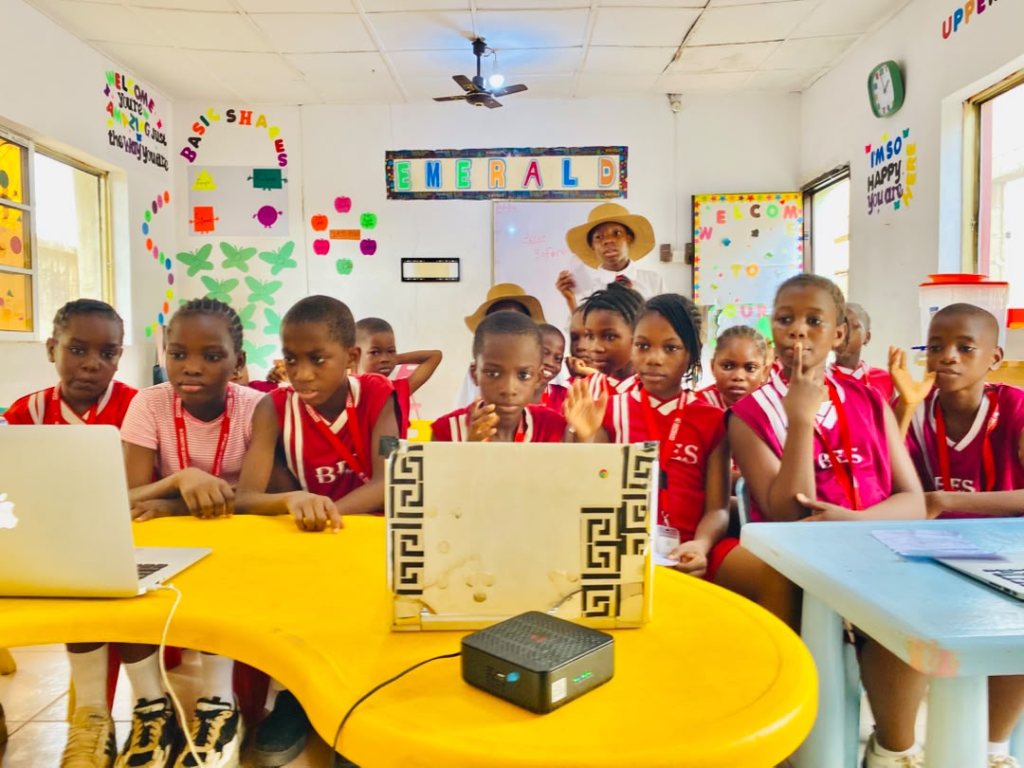
Children participating in a classroom learning activity, highlighting the importance of inclusive educational opportunities.
One of the strongest messages from the dialogue centred on education.
Children representing Bauchi, Kano, Ogun, Lagos, Oyo, Kaduna, and several other states emphasised the importance of access to quality education, regardless of a child’s background or location.
They raised concerns about the barriers that continue to prevent many Nigerian children from learning, including poverty, insecurity, inadequate school infrastructure, and unequal educational opportunities.
Their expectations were clear. They want schools with qualified teachers, adequate learning materials, safe classrooms, and environments where every child has the support needed to succeed.
For children in underserved and vulnerable communities, these improvements could make a significant difference in their ability to remain in school and pursue their ambitions.
The discussion also reinforced the need for inclusive educational opportunities for children living with disabilities, children in rural communities, and those whose education has been disrupted by conflict, displacement, or economic hardship.
Education, as the children highlighted, should not be a privilege determined by where someone is born or the financial circumstances of their family.
Protecting Childhood: A Call to End Child Marriage and Harmful Practices
Another important moment during the dialogue came from the Speaker of the Ondo State Children’s Parliament, who raised concerns about child marriage and called on governments at all levels to take stronger action to end the practice.
The Speaker emphasised that every child deserves the opportunity to experience childhood, receive an education, develop their abilities, and grow into adulthood without being forced into marriage.
The message reflected a broader concern about practices that expose children, particularly girls, to exploitation, abuse, and circumstances that limit their opportunities.
Children should be able to grow, learn, and make age-appropriate decisions about their futures in safe and supportive environments.
Through the Charter, participating children called for stronger protection systems, greater accountability, and sustained efforts to address harmful practices affecting children across the country.
Elections Should Never Cost a Child Their Safety or Future
While elections are an important part of democratic governance, the children also drew attention to the devastating consequences electoral violence can have on families and communities.
During the dialogue, participants expressed concern about children who have lost parents, been displaced from their homes, or experienced trauma and hardship because of political violence.
For a child, the consequences of such violence can extend far beyond the immediate incident. Losing a parent, being forced to leave home, or having education interrupted can affect a child’s emotional well-being, stability, and future opportunities.
The children therefore called on political actors, their supporters, and relevant authorities to take responsibility for protecting children before, during, and after elections.
Their appeal was straightforward: No child should lose a parent, a home, an education, or a future because of electoral violence.
This concern formed an important part of the Charter’s broader call for a peaceful and child-sensitive electoral environment.
From Children’s Voices to Meaningful Policy Commitments
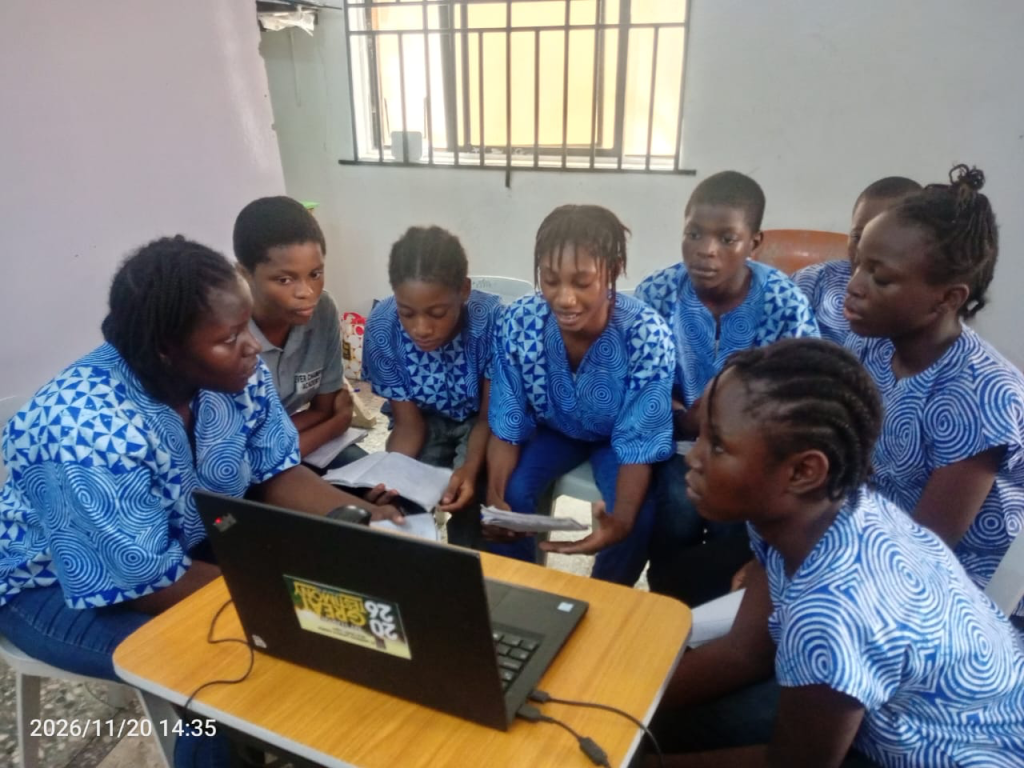
Young people engaging in a group learning and discussion session, reflecting the value of participation and collaboration.
Listening to children is only the beginning. What happens to their contributions after the dialogue is equally important.
This is where the Nigerian Children’s Charter for the 2027 Elections comes in.
The Charter is being developed as a national advocacy document that brings together the collective priorities, concerns, and aspirations of Nigerian children.
Rather than allowing these discussions to end with the World Children’s Day commemoration, K&TRC and its partners intend to use the Charter to support continued engagement with political parties, candidates, policymakers, government institutions, and elected representatives.
The goal is to encourage greater consideration of children’s needs in political commitments, public budgeting, development programmes, and accountability processes.
Importantly, the Charter will remain open to further contributions from children across Nigeria.
This will help ensure that the final document captures diverse experiences, including those of children living with disabilities, children in rural and underserved communities, out-of-school children, and children affected by poverty, insecurity, and displacement.
Through this approach, the initiative seeks to move beyond a single event and establish a continuing platform for children’s participation in conversations about governance and national development.
A Collective Effort Across Nigeria
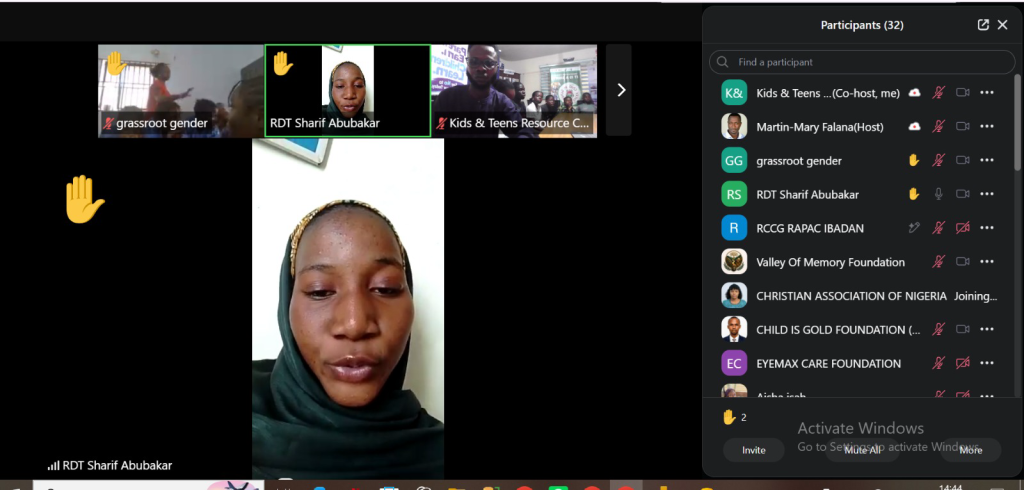
Representatives of civil society organisations and participating groups joining the World Children’s Day national dialogue virtually.
The launch of the Children’s Charter was made possible through collaboration between Kids & Teens Resource Centre and a network of child-focused organisations, educational institutions, advocacy groups, and community-based partners.
These organisations helped create opportunities for children from different parts of the country to participate in the national conversation.
The engagement also demonstrated how technology and partnerships can connect children and advocates across geographical boundaries, allowing their experiences and perspectives to contribute to a shared national agenda.
By bringing these voices together, the initiative highlighted the value of collaboration in advancing children’s rights and ensuring that children from different backgrounds have opportunities to be heard.
My Day. My Rights. My Future.
The launch of the Nigerian Children’s Charter reflected the central message of World Children’s Day 2026: “My Day. My Rights. My Future.”
For the participating children, these words represented more than a theme for an annual celebration. They captured their expectations for a country where children’s rights are protected and their future is treated as a shared responsibility.
Their contributions reminded everyone involved that children experience the consequences of decisions made by adults, even when they are not directly involved in making those decisions.
A child who cannot access education, a child exposed to violence, or a child forced into early marriage carries the consequences of circumstances they did not choose.
Creating a better future therefore requires more than recognising children’s rights in principle. It requires deliberate action, inclusive policies, adequate investment, and a commitment to protecting every child.
The Conversation Must Continue Beyond 2027
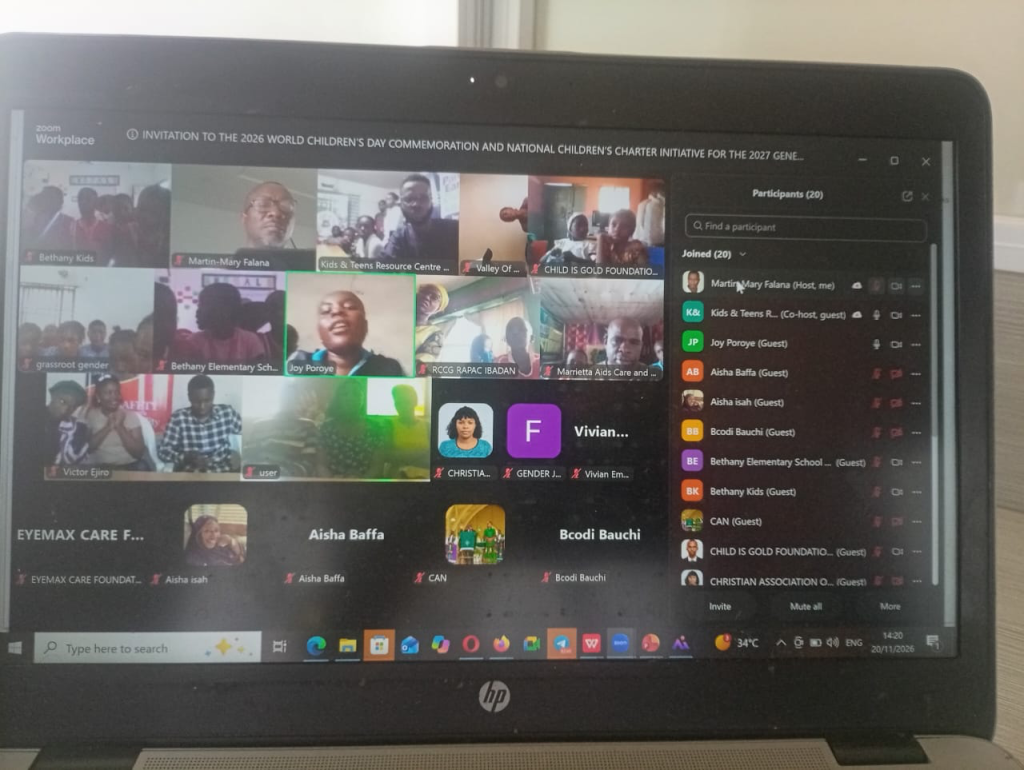
The virtual commemoration provided a platform for children’s representatives and partner organisations to contribute to the national Charter initiative.
As Nigeria moves closer to the 2027 general elections, the Nigerian Children’s Charter provides an opportunity to keep children’s priorities visible in national discussions.
For Kids & Teens Resource Centre and its partners, the launch marks the beginning of continued advocacy and engagement aimed at promoting child-responsive policies and strengthening accountability for children’s rights.
The next phase will involve gathering additional contributions, strengthening partnerships, and encouraging political stakeholders to consider the Charter’s priorities in their commitments and development plans.
Ultimately, the children are asking for a Nigeria where every child can learn, receive healthcare, live safely, enjoy childhood, and pursue their aspirations without fear or discrimination.
They may not have a vote in the 2027 elections, but they have a voice, and that voice deserves to be heard.
Their message is a reminder that the future of Nigeria is not only about those who will lead tomorrow. It is also about the children whose lives are being shaped by the decisions made today.
About Kids & Teens Resource Centre (K&TRC)
Kids & Teens Resource Centre is a child-focused organisation committed to advancing the rights, well-being, protection, and meaningful participation of children and young people.
Through advocacy, partnerships, community engagement, and child-centred initiatives, K&TRC works to amplify children’s voices and promote environments where they can thrive.
Collaborating Organisations and Partners
The Nigerian Children’s Charter initiative was supported by child rights and civil society partners across Nigeria, including:
- Wowiccn Osisioma LGA / GJC Abia (Abia State)
- Eyemax Care Foundation (EMCAF) (Ondo State)
- Nigeria Gender Justice Advocacy Network (FCT, Abia & Lagos States)
- Christian Association of Nigeria (CAN) (FCT)
- Redeemer’s AIDS Initiative for People and Communities (RAPAC) (Oyo State)
- Valley of Memory Foundation (Benue State)
- Bethany Elementary School (Ogun State)
- Marrietta AIDS Care and Relief Foundation (Nasarawa State)
- Bauchi Community Oriented Development Initiative (Bauchi State)
- Sheriff Orphanage and Charity Home Foundation (Kano State)
- Grassroot People and Gender Development (GRADE) (Lagos State)
- Kingdom Seeker Charitable Foundation (Oyo State)
- Ondo State Children’s Parliament (Ondo State)
- Mari-Care Foundation for Widows, Single Parents, Orphans and Vulnerable Children Nigeria (MARI-CARE) (Kano State)
- International Federation of Women Lawyers (FIDA) Kano (Kano State)
- Child is Gold Foundation (Bauchi State)
- Association for Orphans and Vulnerable Children in Nigeria (Bauchi State)
- The Graciella Initiative (Ogun State)
- Hall of Care and Good Humanitarian Initiative (Ogun State)
#NigeriaChildrenDecide #WorldChildrensDay #OurFutureOurVoice