
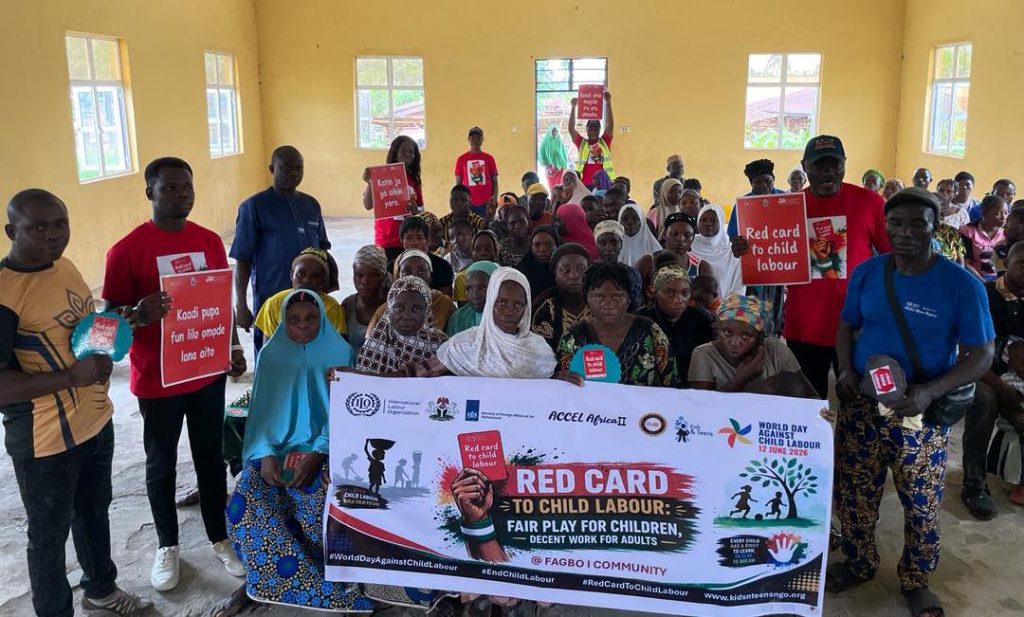
At Kids & Teens Resource Centre (K&TRC), our commitment to protecting children and promoting their rights remains at the heart of everything we do. As part of activities commemorating the 2026 World Day Against Child Labour, we partnered with the International Labour Organization (ILO) through the ACCEL Africa Project Phase II to strengthen community awareness on child labour and improve access to social protection services for vulnerable households across Ondo State.
Working closely with the Federal Ministry of Labour and Employment (FMLE), the Ondo State Contributory Health Commission (ODCHC), the State Operations Coordinating Unit (SOCU), community leaders, and other stakeholders, we carried out a series of sensitization and enrollment activities in Wasimi Odunwo, Fagbo I, Fagbo II, and Bamikemo communities.
Raising Awareness Against Child Labour
The World Day Against Child Labour provided an important opportunity to engage directly with parents, caregivers, community members, and children on the dangers of child labour and the importance of protecting every child’s right to education, safety, and healthy development.
To create awareness throughout the communities, a customized audio jingle carrying anti-child labour messages was broadcast across the communities. The message emphasized that subjecting children to excessive labour, hazardous work, or activities that interfere with their education is harmful and unacceptable.
The awareness campaign attracted significant community attention and set the stage for meaningful conversations on child protection and children’s rights.
Bringing Social Protection Services Closer to Communities
Beyond raising awareness, the programme also focused on connecting vulnerable households to essential social protection services.
Community members were enrolled into the Non-Contributory Health Scheme of the Ondo State Government and registered on the State Social Register (SSR), enabling eligible households to access future social intervention programmes and healthcare support.
Representatives from the State Operations Coordinating Unit (SOCU) provided information about the State Social Register and explained its role in identifying vulnerable households for government intervention programmes. Officials from the Ondo State Contributory Health Commission also educated participants on the benefits of the Non-Contributory Health Scheme and how registered beneficiaries can access healthcare services and essential medications through designated health facilities.
Educating Communities on the Impact of Child Labour
Throughout the sensitization sessions, participants were engaged in discussions on the harmful effects of child labour on children’s physical, emotional, educational, and social development.
Representatives from the Federal Ministry of Labour and Employment highlighted how involving children in farm work during school hours, forcing them into street hawking, or exposing them to hazardous labour deprives them of educational opportunities and puts their wellbeing at risk.
Using practical examples and visual learning materials, community members were encouraged to recognize different forms of child labour and take active steps to ensure children remain in school and are protected from exploitation.
The discussions reinforced a simple but powerful message: every child deserves the opportunity to learn, grow, and pursue their dreams without being burdened by exploitative labour.
Children Become Advocates for Change
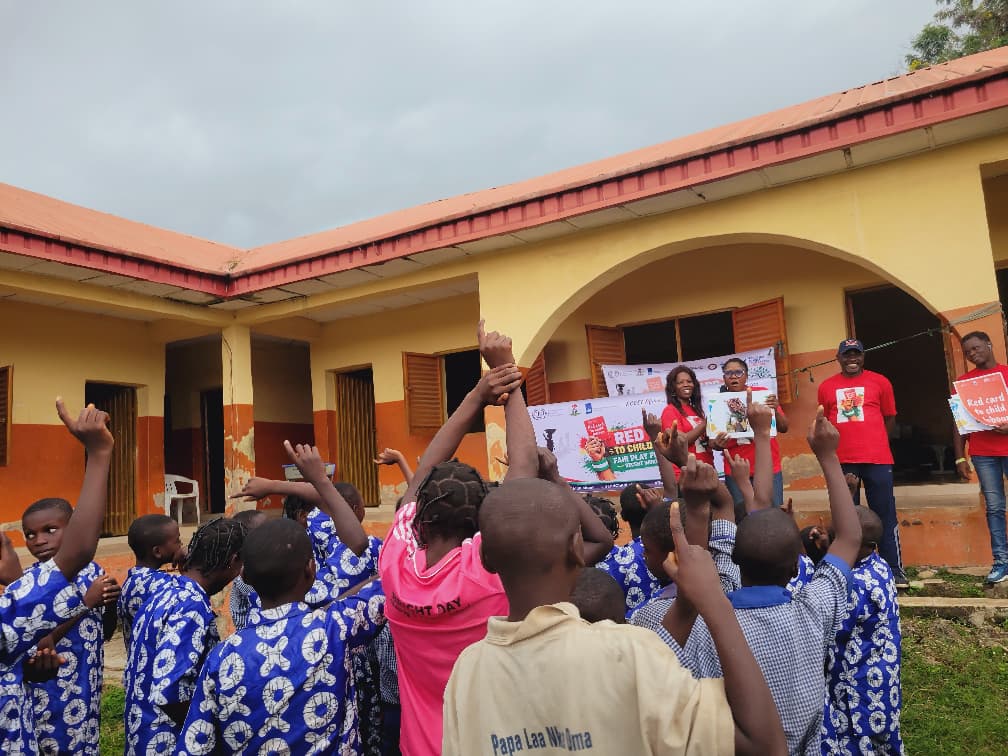
One of the most memorable moments of the commemoration was a drama presentation by pupils of Community Primary School, Wasimi Odunwo.
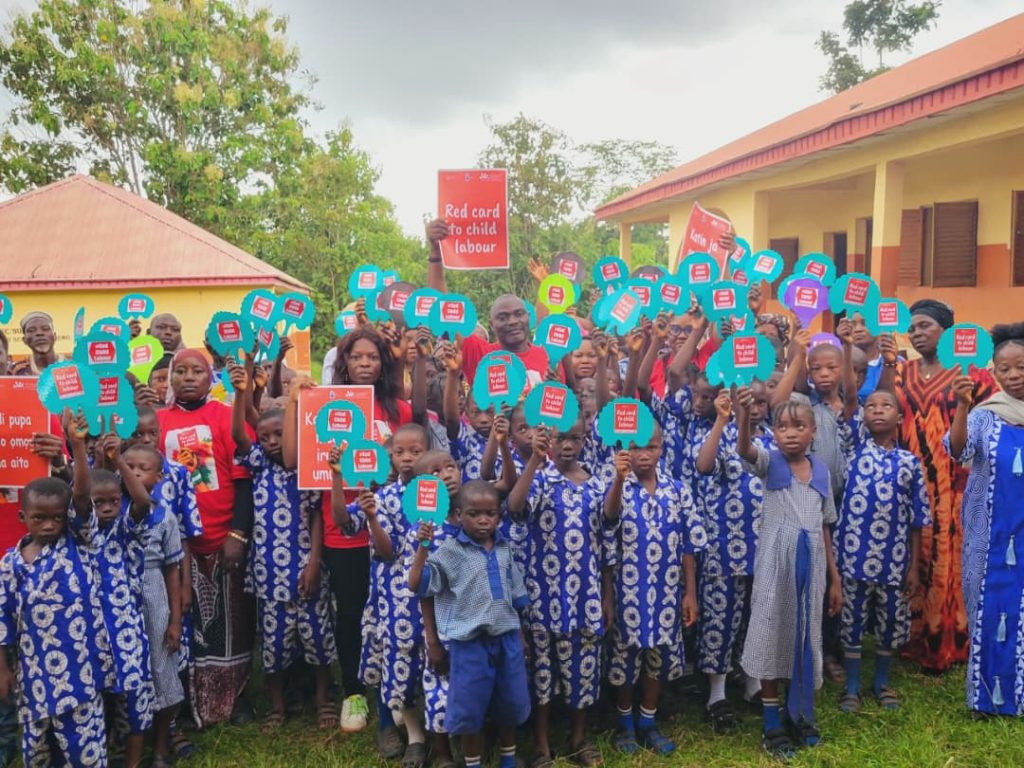
Through songs, storytelling, and role-play performances, the children creatively illustrated the consequences of child labour, including school dropout, child abuse, early marriage, injury, and lost opportunities. Their presentation highlighted the importance of education and demonstrated the powerful role children can play in advocating for their own rights.
The performance received enthusiastic applause from community members and stakeholders and served as a reminder of why collective action against child labour remains essential.
Community Engagement and Participation
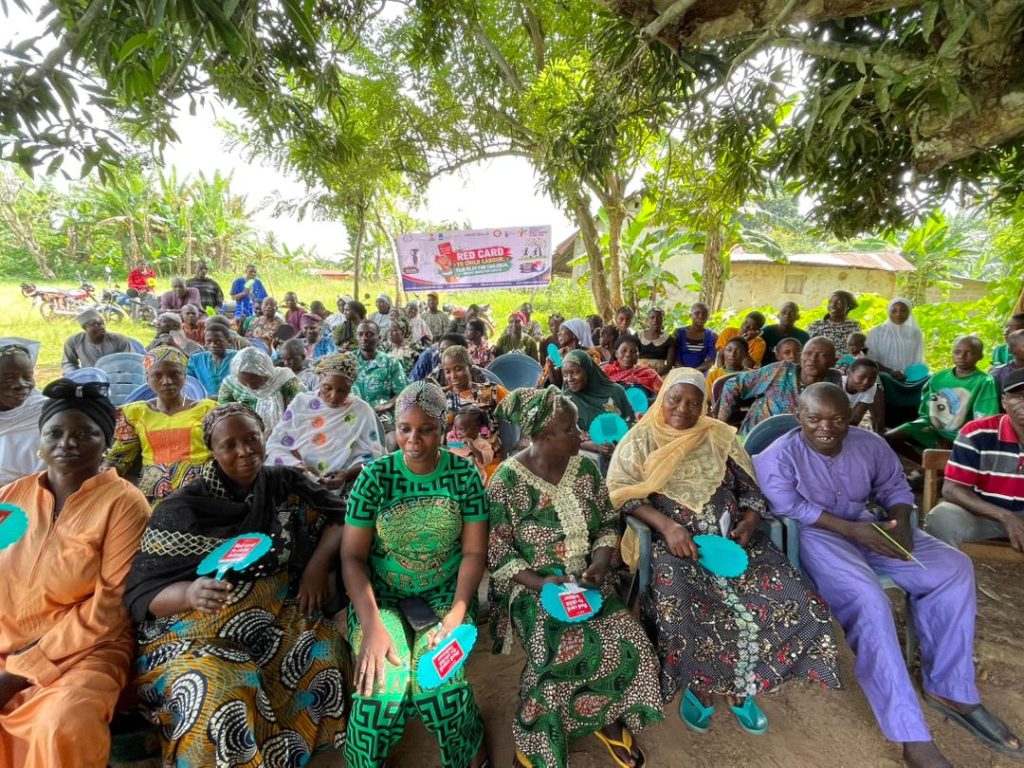
At Fagbo I, Fagbo II, and Bamikemo communities, residents actively participated in both the awareness sessions and the enrollment exercises.
Community members had the opportunity to ask questions about the healthcare scheme and enrollment requirements, helping to ensure greater understanding and participation. Concerns regarding National Identification Number (NIN) registration and previous network-related registration challenges were addressed, with assurances that additional opportunities would be provided to support affected beneficiaries.
Following the sensitization sessions, enrollment into the Non-Contributory Health Scheme and registration on the State Social Register commenced, while individuals with incomplete applications received support to update their records.
A Collective Commitment to Ending Child Labour
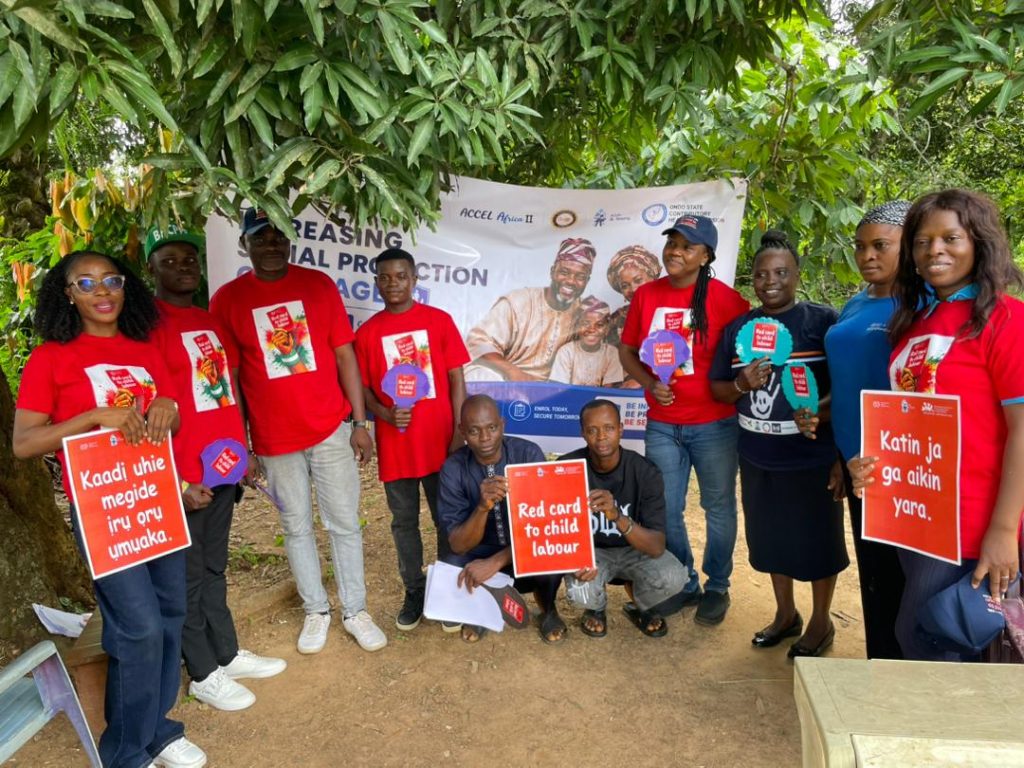
As part of the commemoration, participants received hand fans carrying the message “Red Card to Child Labour,” symbolizing a shared commitment to protecting children from exploitation and promoting their rights.
Community members expressed appreciation for the initiative, noting that the programme not only increased awareness about child labour but also connected vulnerable households with critical social protection services that can improve their wellbeing and quality of life.
Looking Ahead
The activities commemorating the 2026 World Day Against Child Labour form part of the broader efforts of the ACCEL Africa Project Phase II to eliminate child labour in agricultural communities while expanding access to healthcare and social protection services for vulnerable households.
At Kids & Teens Resource Centre, we remain committed to working with government institutions, development partners, communities, and families to create safer environments where children can learn, thrive, and achieve their full potential.
Together, we can build communities where every child is protected, every child is in school, and every child has the opportunity to pursue a brighter future free from child labour.